The Seven Founders of General Wisdom
They left the most powerful AI laboratory in the world — not for money, not for fame, but because they believed something essential was being forgotten. Who are the Seven Founders of General Wisdom?
SPECIAL REPORT: ARTIFICIAL INTELLIGENCE
PART 2
Editor’s Note: Because Anthropic’s S-1 registration statement has been filed confidentially with the United States Securities and Exchange Commission (the “SEC”) and is not yet public, all financial figures, ownership percentages, and projections cited in this report are drawn from widely published reporting by Bloomberg, CNBC, The Wall Street Journal, TechCrunch, and other sources; every figure should be independently verified and cross-checked against the S-1 once it becomes available.
THE DEPARTURE
In the summer of 2021, something unusual happened in San Francisco. Seven people — among the most talented and most highly compensated researchers in the history of artificial intelligence — resigned from the same company within weeks of one another. They had not been recruited away. They had not been fired. They were not leaving for retirement, or for a rival, or for the easy comfort of a venture-backed startup promising them equity and autonomy. They were leaving because they were afraid. Not of failure, but of success without wisdom — of building something of extraordinary power and handing it to a world that was not yet ready to hold it safely.
The company they left was OpenAI. The company they founded was Anthropic. And the story of who these seven people are, where they came from, and what drove them to make one of the most consequential decisions in the history of technology is, at its core, a story about what happens when scientists take seriously the implications of their own work.
Together, this founding team holds equity in Anthropic that, at the company’s current valuation of nearly $965 billion, is worth well in excess of $100 billion in aggregate. They are about to become some of the wealthiest individuals on earth. But the wealth is the footnote, not the story. The story is the conviction — shared across seven different biographies, seven different paths to the same room — that getting artificial intelligence right matters more than anything else happening in the world right now.
“They were not leaving for money or a rival. They were leaving because they were afraid — not of failure, but of success without wisdom.”
PART ONE: THE FAMILY — WHERE IT BEGAN
A Leathersmith from Tuscany and a Library Administrator from Chicago
To understand Dario and Daniela Amodei — the CEO and President of Anthropic, and the gravitational center around which the rest of the founding team organized — you have to begin not in Silicon Valley but in a medieval hilltop town in Tuscany.
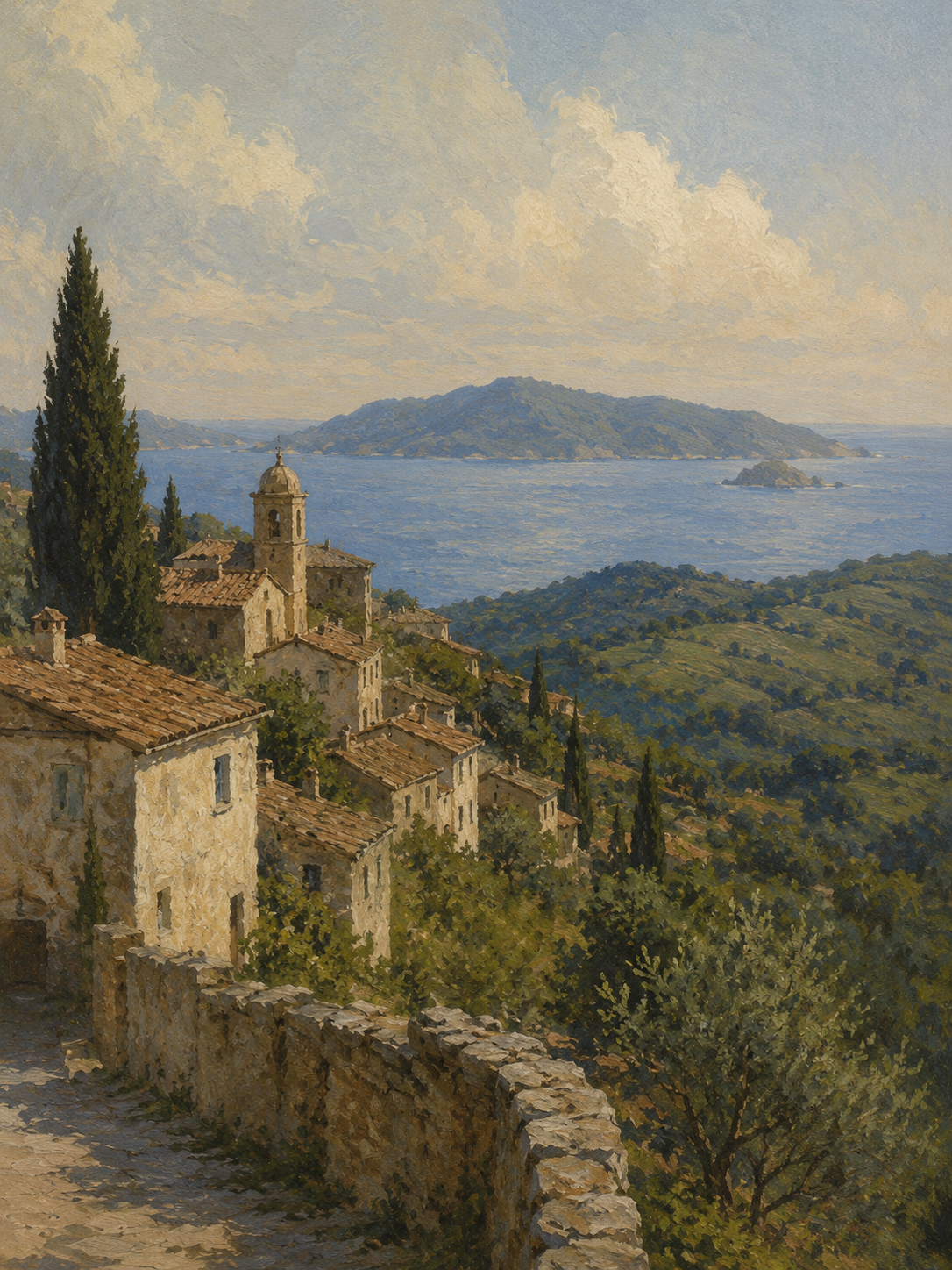
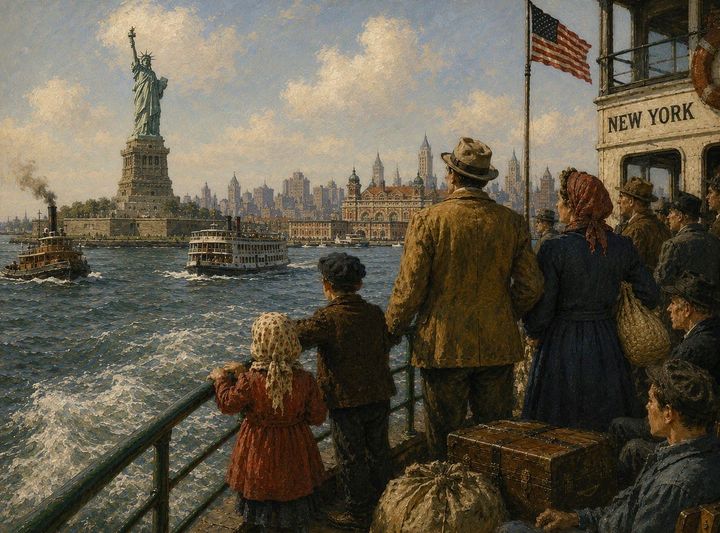
Massa Marittima sits in the province of Grosseto, in the part of Tuscany that tourists rarely reach — not far from the island of Elba, where Napoleon spent his first exile. It is a town of stone streets and deep craft traditions, where families have worked the same trades for generations. It was from here, sometime in the years before Dario’s birth, that a young leathersmith named Riccardo Amodei made the journey west — across the Atlantic, to San Francisco, California.
Riccardo was, by all accounts of those who knew him, a man of quiet craftsmanship and deep warmth. He settled in a city then in the early throes of its transformation into the global capital of technology, and there he met and married Elena Engel — a Jewish-American woman from Chicago who ran construction and renovation projects for public libraries in Berkeley and San Francisco. Elena was, in her own way, as purposeful as her husband: a woman who believed, practically and daily, in the social value of knowledge and its accessibility to everyone, and who dedicated her working life to improving the institutions that delivered it.
In 1983, they had a son. They named him Dario. Four years later, in 1987, they had a daughter. They named her Daniela.
The household the two children grew up in was warm, intellectually open, and shot through with a sense of responsibility to the world beyond their front door. Their father, who had crossed an ocean to build a life with his hands, brought the Italian tradition of deep craft and patient care to everything he made. Their mother brought a civic sensibility — a conviction that education was not a private privilege but a common good. The children were told to follow their curiosity wherever it led, and then to go deep. Both of them did.
Both attended Lowell High School — San Francisco’s most academically rigorous public institution, an examination school that admits students on academic merit and has produced a disproportionate share of scientists, technologists, and public intellectuals. Dario was the kind of student who seemed not so much to study as to inhale knowledge, with a particular appetite for physics and mathematics. Daniela, four years behind him in the same hallways, developed a different and equally intense gift: she was awarded a classical flute scholarship — evidence of a precision and discipline of mind that would later prove indispensable in building one of the most complex organizations in the world.
Dario and Daniela have both recalled, in separate interviews, the closeness of their childhood bond. Dario would read to his younger sister or sit with her working through mathematics problems when she was small — the older brother as teacher, a dynamic that has never entirely disappeared. Those who work closely with both of them today describe a professional relationship of unusual fluency: two people who finish each other’s sentences not because they think identically, but because they have been in genuine dialogue since childhood.
A Father’s Death and a Son’s Redirection
Riccardo Amodei’s health declined as his children grew. He suffered from a rare illness that, for much of his adult life, carried roughly even odds of survival. In 2006 — the year Dario graduated from Stanford University with a bachelor’s degree in physics — his father died. The loss was devastating. But what made it harder to absorb, in the years that followed, was the timing. Within four years of Riccardo’s death, a scientific breakthrough transformed that same illness from one that killed half its patients to one that was ninety-five percent curable. Had the medicine arrived a few years earlier, Dario’s father might have lived.
That experience — watching his father die of something that the science would soon be able to prevent, living with the knowledge of how close the timing had been — crystallized something in Dario Amodei that has never left him. He shifted his graduate studies at Princeton from theoretical physics to biophysics. His doctoral thesis examined the electrophysiology of neural circuits — the mathematics of how biological neurons fire and communicate. And somewhere in that work, tracing the architecture of the brain in search of patterns that could explain and ultimately address human illness, he found his way to artificial neural networks, and from there to the technology that would define the rest of his life.
His father, the leathersmith from Massa Marittima who crossed an ocean and built a life with his hands, had given him something more durable than any inheritance: the conviction that what you make with care and craft matters — that the quality of the thing you build is inseparable from the quality of the person building it. At Anthropic, that conviction has a name. They call it safety.
PART TWO: THE SEVEN — PROFILES IN CONVICTION
Dario Amodei — CEO
Dario Amodei is, by any measure, one of the most unusual executives in the history of American technology. He holds a PhD in biophysics from Princeton University and began his career as a researcher at the National Institutes of Health, studying the mathematics of how biological neurons fire. He did not arrive at AI through entrepreneurship or software engineering. He arrived through science — and the pivot from academic researcher to company builder is, in many ways, the pivot that defines Anthropic itself.
At OpenAI, where he served as Vice President of Research, Amodei was the driving force behind some of the most significant advances in large language model development. He is co-credited as a co-inventor of Reinforcement Learning from Human Feedback — RLHF — the technique that taught AI models to be helpful and harmless by learning from human judgments rather than raw data alone. He led the development of GPT-2 and GPT-3. He was, by any external assessment, one of the two or three people most responsible for OpenAI’s technical success. And yet he left.
The reason, stated clearly in Anthropic’s founding documents and in Dario’s own public writing, is that he came to believe that the commercial pressure bearing down on OpenAI was creating a structural incentive to move faster than safety considerations warranted. He did not believe Sam Altman or OpenAI’s board were malicious. He believed the incentives were misaligned, and that misaligned incentives, over time, produce outcomes that no individual intends. He decided to build an organization where the incentives were different.
In 2025 and again in 2026, Time magazine named him one of the world’s hundred most influential people — alongside his sister, a recognition that is perhaps without precedent for two siblings in the same calendar year. Forbes estimates his net worth at approximately $7 billion based on pre-IPO valuations, though his actual equity stake at a $965 billion company valuation almost certainly places his personal wealth in the tens of billions of dollars. Those who know him well suggest that the number, whatever it is, does not especially interest him. The mission does.
Daniela Amodei — President
The trajectory that took Daniela Amodei from a classical flute scholarship at the University of California, Santa Cruz — where she studied English literature — to the presidency of a nearly-trillion-dollar AI company is one of the more improbable journeys in Silicon Valley history. She did not study computer science. She did not study business. She studied language and music: two disciplines that demand the same underlying qualities of mind — close attention to structure, the ability to hear what is actually being communicated rather than merely what is being said, and the capacity to perform with precision under pressure.
After UC Santa Cruz, she joined Stripe in 2013, where she built revenue and customer success infrastructure during the period when Stripe was transforming from a scrappy startup into a global payments platform. She was, by all accounts from that period, extraordinarily effective — someone who could translate a technically complex product into commercial reality with an intuitive grasp of the human dimensions of enterprise relationships. OpenAI recruited her in 2018. She managed the organization through the development of GPT-2 before moving into safety and policy roles — a transition that placed her precisely at the intersection of commercial and ethical considerations that would later define Anthropic’s identity.
As Anthropic’s President, Daniela holds an equity stake that, alongside her brother’s, places the two of them among the wealthiest individuals in American technology upon the IPO. More important than the financial outcome, however, is what she has built: the operational machinery of a company that has grown from eight hundred employees in early 2024 to an estimated three to five thousand today, serving more than 300,000 enterprise customers including eight of the Fortune 10, all while maintaining the cultural coherence and safety-first orientation of an organization that started in a living room. That is not an accident. It is the product of Daniela Amodei’s relentless, methodical, and deeply purposeful work.
Tom Brown — Co-Founder and Research Lead
Tom Brown arrived at the intersection of artificial intelligence and entrepreneurship by an unlikely route. He studied at MIT at the intersection of computer science and brain and cognitive sciences — an interdisciplinary program that attracted students who wanted to understand intelligence, not merely simulate it. Before entering AI research full-time, he co-founded Grouper, a social networking startup that went through Y Combinator, and which gave him an early education in the gap between things that work technically and things that people actually use.
At OpenAI, Brown became the lead engineer and lead author on GPT-3 — the 175-billion-parameter language model whose 2020 release was the most significant demonstration, up to that point, of what large language models were capable of. The GPT-3 paper, “Language Models are Few-Shot Learners,” has been cited thousands of times and is by any reasonable measure one of the foundational documents of the modern AI era. It demonstrated in-context learning — the ability of a sufficiently large model to perform tasks it had never been explicitly trained for, simply by being shown a few examples — and in doing so rewrote the industry’s understanding of what was possible. Tom Brown was thirty years old when it was published.
That he then walked away from the organization where that paper was written — and from the extraordinary professional capital it had generated — to co-found a smaller, less certain, more mission-driven company says something important about his priorities. His equity stake in Anthropic, estimated by analysts at roughly two to four percent of the company, represents a personal holding worth approximately $19 billion to $38 billion at current valuations.
Chris Olah — Co-Founder, Interpretability
Chris Olah’s path to Anthropic is unlike any other co-founder’s in the company’s history. He was born in Toronto in 1993 and attended The Abelard School — a small, dialogue-based progressive school in Toronto whose educational philosophy emphasizes deep understanding over standardized achievement. He graduated as a National AP Scholar in 2010. And then, at eighteen years old, he did something almost unheard of among people who go on to lead foundational research programs at trillion-dollar companies: he dropped out of university.
He was selected as a Thiel Fellow — chosen for Peter Thiel’s program that grants $100,000 to young innovators under twenty who commit to pursuing their projects outside the traditional academic path. Olah’s project was not a startup in the conventional sense. It was rarer than that: a sustained, obsessive attempt to understand, visually and rigorously, what was actually happening inside neural networks. Not what they could do, but what they were doing — the internal mechanics of how these systems represented the world.
Through a combination of prodigious self-teaching and pure intellectual obsession, Olah became, without completing an undergraduate degree, one of the world’s foremost experts in neural network interpretability. At Google Brain and later OpenAI, he produced some of the most widely read and aesthetically distinctive research in the history of machine learning — published on his personal blog and through Distill, the interactive ML journal he co-founded, which treated clarity of explanation as a scientific virtue equal in importance to rigor of method. His “circuits” work — literally tracing the computational pathways inside a neural network to identify how individual concepts are represented — is now considered foundational to AI safety. The core bet is simple: you cannot make a system safe if you do not understand what it is doing. At Anthropic, Olah leads the interpretability team that has made that bet the cornerstone of the company’s safety strategy.
His equity stake, like those of his co-founders, is estimated at roughly two to four percent of the company — a holding worth, at current valuations, somewhere between $19 billion and $38 billion. For a self-taught researcher who never finished his undergraduate degree, it is perhaps the most remarkable return on intellectual conviction in the history of Silicon Valley.
Jared Kaplan — Co-Founder and Chief Scientist
Jared Kaplan did not come to artificial intelligence from computer science. He came from theoretical physics — from the deepest end of the discipline, the part that deals with quantum gravity, conformal field theory, and the mathematical structure of the universe at its most fundamental scales. He attended the Illinois Mathematics and Science Academy, a residential high school in Aurora, Illinois, for students of exceptional academic ability. He earned a bachelor’s degree in physics and mathematics from Stanford, a PhD in physics from Harvard, and spent fifteen years as a professor at Johns Hopkins University, exploring the mathematical relationships that govern reality at its smallest dimensions.
In 2020, Kaplan co-authored a paper at OpenAI that changed the AI industry as thoroughly as any paper of the decade. “Scaling Laws for Neural Language Models” demonstrated, with the precision of a physicist applying mathematical analysis to empirical data, that the performance of large language models follows predictable power-law relationships with the amount of compute, data, and parameters used to train them. In other words: you could predict, with reasonable accuracy, how good a future AI model would be, simply based on how much you were willing to spend building it. It was a roadmap. Every major AI laboratory in the world reorganized its research strategy around its implications.
What is remarkable about Kaplan’s trajectory is not merely the quality of his work but the audacity of his career pivot. At the age of roughly forty, with a tenured professorship at a prestigious research university and a publication record that would be the envy of any physicist, he chose to abandon academic security for the uncertainty of a startup built on a mission that many in the industry thought naive. He serves at Anthropic as Chief Scientist, the person most responsible for ensuring that the company’s investments in model development are directed by the best available theory of how to make progress. His estimated equity stake of two to four percent translates, at current valuations, to between $19 billion and $38 billion — a financial outcome that would have been unimaginable to the theoretical physicist who spent fifteen years studying quantum gravity at Johns Hopkins.
Jack Clark — Co-Founder and Head of Policy
Jack Clark arrived at the frontier of AI from a direction that none of his co-founders could claim: he was a journalist first. He covered distributed systems, quantum computers, and AI research for Bloomberg BusinessWeek and The Register — trade publications that approached technology with a rigor and skepticism that academic and industry insiders rarely manage about their own fields. That background gave Clark something that pure researchers almost never have: the ability to see the work from the outside, to ask the questions that practitioners had stopped asking because they had become too immersed in the project to notice what was missing.
At OpenAI, where he became Policy Director, Clark built the organization’s external engagement function at a time when the policy and regulatory implications of advanced AI were beginning to demand serious institutional attention. He founded Import AI, a newsletter covering AI research with the eye of a deeply informed, deeply skeptical journalist, which has built a readership of seventy thousand people including most of the leading figures in the field. He is a founding member of the AI Index at Stanford University and served on the U.S. National Artificial Intelligence Advisory Committee.
At Anthropic, Clark leads policy and government affairs — the function that will become increasingly central as the company navigates a regulatory environment made considerably more complex by a public listing. His background as a journalist who became a policy architect who became a co-founder of a trillion-dollar company is, in miniature, the story of AI itself: a field that began in theory, passed through research, and is now landing with full force in the practical and political world. His equity stake, estimated at two to four percent, represents a holding worth approximately $19 billion to $38 billion at current valuations.
Sam McCandlish — Co-Founder and Research Scientist
Sam McCandlish is, among the seven Anthropic co-founders, perhaps the least publicly visible — and in the culture of frontier AI research, that is itself a form of distinction. He is a theoretical physicist by training, specializing in the mathematics of deep learning: the study of why neural networks behave the way they do, how gradient descent finds solutions in high-dimensional spaces, and what the theoretical limits of learning from data actually are. His work sits at the boundary between pure mathematics and applied machine learning — a boundary that, in the current era of AI development, is one of the most important intellectual frontiers in the world.
McCandlish’s contributions to Anthropic are largely internal — shaping the theoretical foundations that underpin how the company builds and trains its models. He is, in the parlance of research organizations, a force multiplier: someone whose work enables other researchers to be more effective, whose understanding of the deep structure of the problem informs decisions that would otherwise be made by intuition. His equity stake is estimated in the same range as his co-founders, placing his personal holdings at between $19 billion and $38 billion at current valuations.
Benjamin Mann — Co-Founder and Tech Lead, Product Engineering
Benjamin Mann came to Anthropic from a background that bridged software engineering and AI research in ways few of his co-founders could match. He studied computer science at Columbia University and worked as a senior software engineer at Google before joining OpenAI, where he became one of the architects of GPT-3 — working specifically on the infrastructure and efficiency systems that made a 175-billion-parameter model actually trainable and deployable at scale. He was among the first authors on the GPT-3 paper and, in a detail that captures the commercial realities of frontier AI research, personally helped run the product demonstrations for Microsoft that helped secure the billion-dollar investment that funded GPT-3’s development. At Anthropic, Mann serves as tech lead for product engineering — the person responsible for translating research breakthroughs into the actual products that hundreds of thousands of enterprise customers interact with daily. He has spoken publicly about the nightmare scenarios that drove him to leave OpenAI: not the fear that AI would fail, but the fear that it would succeed in the hands of people who were not thinking carefully enough about what success might unleash.
WHAT BOUND THEM TOGETHER
Seven people. Seven different biographies. A leathersmith’s son from San Francisco. A flutist who studied English literature. An MIT engineer who once ran a Y Combinator startup. A Toronto dropout who never finished his undergraduate degree. A Harvard-trained physicist who spent fifteen years studying quantum gravity. A Bloomberg journalist turned policy architect. A mathematician who lives at the boundary between theory and practice. Two others whose paths are no less singular.
What bound them was not a shared background. It was not a shared methodology or a shared technical specialty. It was something rarer and, in the long run, more durable: a shared assessment of what was at stake. Each of them, by the time they left OpenAI, had reached the same conclusion independently — that the technology they were building was not like previous technologies, that its power demanded a quality of care and deliberateness that commercial pressure was making systematically harder to maintain, and that the cost of getting it wrong was not measured in failed products or disappointed investors but in something far larger and far less recoverable.
They bet their careers on that conviction in 2021. They are about to find out, as the most closely watched IPO in history moves toward its close, whether the world agrees with them.
“Each of them had reached the same conclusion independently: the cost of getting it wrong was not measured in failed products but in something far larger and far less recoverable.”
WHAT THEY BUILT — AND WHAT IT COST
When the Anthropic IPO prices — most likely in the autumn of 2026, at a valuation that will make it one of the most significant capital markets events in history — the seven people who left OpenAI together in the summer of 2021 will become extraordinarily wealthy. The founding team’s aggregate equity, at current valuations, exceeds $100 billion. Dario and Daniela Amodei, as the primary architects of the enterprise, hold the largest individual stakes; their co-founders hold positions estimated at two to four percent each, worth between $19 billion and $38 billion per person at the $965 billion valuation.
But the more important accounting is not financial. In five years, this group of seven people built a company that is at the center of the most consequential technological transition in human history. They attracted three thousand to five thousand of the world’s best researchers and engineers. They built an enterprise customer base that includes eight of the Fortune 10. They developed AI models that have been deployed at a scale that touches hundreds of millions of people. And they did all of it while insisting, against considerable pressure and considerable skepticism, that safety and capability were not in tension — that you could build the most powerful AI in the world and the most careful AI in the world at the same time, and that these goals were not merely compatible but mutually reinforcing.
Whether they are right will be one of the defining questions of the coming decade. The IPO is not the end of the story. It is, in many ways, the beginning of the hardest chapter — the moment when the mission meets the market, when the Long-Term Benefit Trust meets the quarterly earnings call, when the children of a Tuscan leathersmith and a Chicago library administrator discover what their conviction is worth in the most literal sense imaginable.
Riccardo Amodei, the man who crossed an ocean with his hands and his craft, did not live to see what his children built. But in the patient care he brought to his work, in the warmth he brought to his family, and in the sense of responsibility to the world that he and his wife planted in two children who grew up to change it, he is present in everything Anthropic is. That, too, is a form of legacy that no prospectus can capture.
EDITOR’S NOTE
Editor’s Note: This is part of Short Stop Media’s continuing coverage of artificial intelligence, technology, and capital markets. Future reports will examine Anthropic’s IPO filings, governance structure, insider ownership, the Long-Term Benefit Trust, OpenAI and its unique corporate structure, and any future public filings involving Anthropic, SpaceX, OpenAI and related enterprises.


Comments ()