The Captain and the City
The Summer Thurman Munson Died
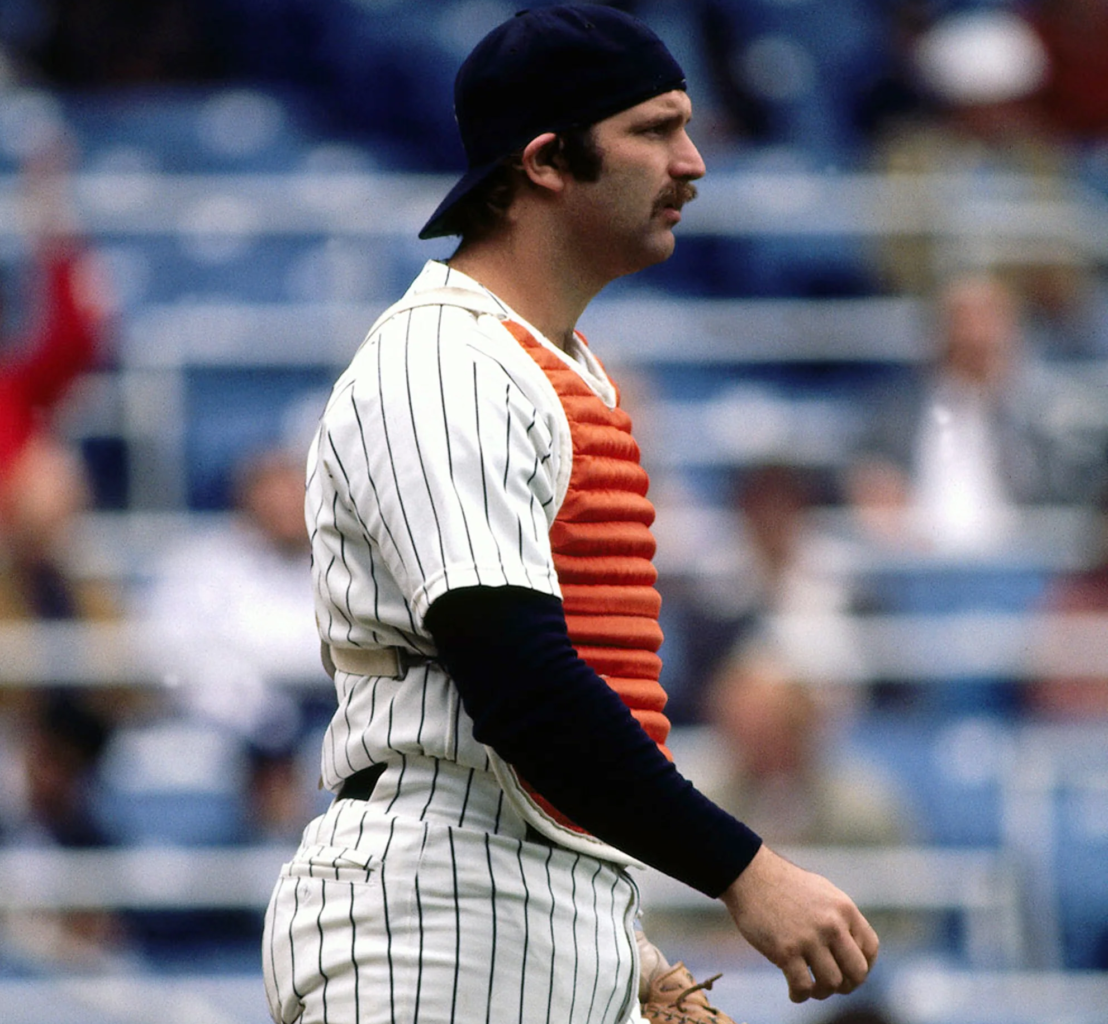
In a city on edge, the Yankees had a captain who held everything together—until suddenly he didn’t.
Fourteen miles due north of the corner of Broadway and Wall Street lay Inwood, a narrow edge of Manhattan where the financial capital of the world seemed to give way to something else entirely—quieter, older, and untouched—and where Inwood Hill Park, what we simply called the “Park,” with its glacial caves and rock formations, still held the last natural forest and salt marsh on the island, and where legend placed Peter Minuit’s improbable purchase of Manhattan in 1626. Just beyond it, the Spuyten Duyvil Bridge connected New York Island to the Bronx and the mainland, crossing a stretch of water the Dutch had called Spuyten Duyvil—the “Spinning Devil”—where currents twisted and collided hard enough to earn a name, an even more ominous reputation, and a story of a stubborn Dutchman crossing it in spite of the devil himself.
Inwood
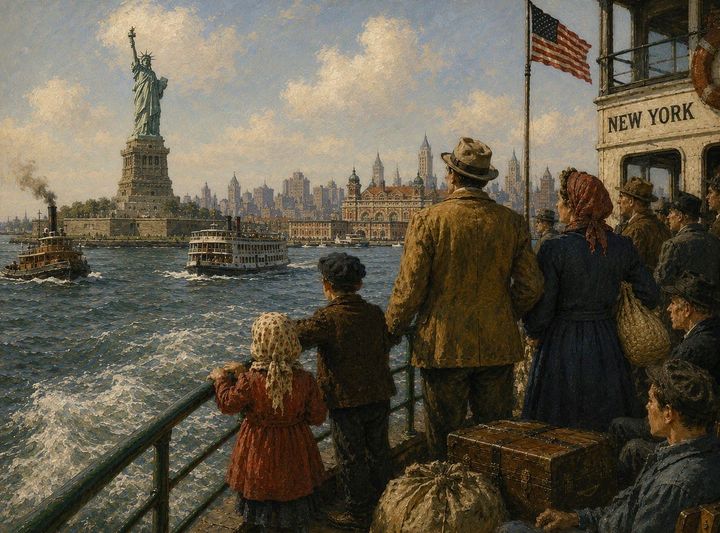
In the 1970s, this was where we lived—like so many sons and daughters of Irish immigrants, later joined by Puerto Rican families, and then by a larger Dominican wave, alongside Jewish families who had arrived earlier from Eastern Europe. Different paths, different histories, all landing at the northern tip of Manhattan—but one thing united them all: the New York Yankees.
Our lives were bounded by the Church of the Good Shepherd, a towering structure at Broadway and 207th Street that held together generations in constant motion, and by the streets, fields, and courts that filled whatever hours the city left us. We played stickball in the streets—through the fire hydrant spray, from manhole cover to manhole cover—softball on hardtop Catholic schoolyards in the PAL leagues, and hardball in any patch of dirt or grass we could find—from the Park to Dyckman, to Van Cortlandt, to Highbridge. We traded baseball cards, and later Marlboro cigarettes, and drank Budweiser from ice-cold eight-ounce bottles we called nips.
Most nights, we watched the games at home with our fathers, listening to Phil Rizzuto—the Scooter—along with Bill White and Frank Messer, their voices moving in and out of the call while dinner was served. The men on the field wore pinstripes. Our fathers wore uniforms too—NYPD, FDNY, and MTA—and on big nights they would take us out afterward, into one of the Irish bars scattered through the neighborhood, where the game would still be playing and it felt like we had found our way into the bleachers.
New York felt unsettled then—its confidence shaken, its edges fraying—and a few miles to the south, in the Bronx, that feeling sometimes caught fire. During the 1977 World Series, as the Yankees played the Dodgers, a blaze burned in the distance and Howard Cosell said it plainly: “The Bronx is burning.”
But for us, it barely registered.
And yet, something held. The Yankees were winning again—champions in 1977 and 1978—and at the center of it was Thurman Munson, who didn’t look like the city or talk like its stars—then or now—but held it together all the same.
Drop Dead
New York in the 1970s was a city under real strain—financially and on the streets. In 1975, it came to the edge of bankruptcy, forced toward default before a last-minute rescue. When President Gerald Ford initially refused federal assistance, the headlines captured the mood bluntly: “Ford to City: Drop Dead.”
Crime was rising. Arson and abandonment scarred neighborhoods across the Bronx. The subways ran covered in graffiti, loud and unreliable, carrying the city anyway. The sense of disorder was hard to miss—even if, as kids, we rarely saw it that way.
The blackout of 1977 brought looting and fires that seemed to confirm what many already feared about where the city was headed. And yet, it wasn’t even the worst of it—still years before the crack epidemic and the record murder rates of the late 1980s and early 1990s.
By the end of the decade, Ed Koch was walking the streets asking, ‘How’m I doing?’—trying to convince a city it could still answer the question.
For those of us growing up then, the city may have been fraying.
But it was still ours.
The Captain
Thurman Munson—5’11”, barely 200 pounds, built more like the men we knew than the stars we saw—didn’t look like the city, and he wasn’t from it either. He was born on June 7, 1947, in Akron, Ohio, and raised in nearby Canton. The son of a World War II veteran and the youngest of four children, he grew up competing with his older brother and his friends—an environment that helped forge the toughness that would define him.
He excelled in every sport. All-city and all-state in football, basketball, and baseball, he eventually moved from shortstop to catcher to handle a star pitcher. It was there—in that position—that he would come to define our days.
He earned a scholarship to Kent State, where he became one of the best players in the country. As a senior, he hit .363, was named an All-American, and became known as someone others looked to—quietly—for leadership.
If you weren’t from New York, you might not understand what the title of Captain meant. The Yankees didn’t name one the way other teams did. Years could pass—sometimes decades—without one. When Munson was named captain by George Steinbrenner in 1976, he was the first since Lou Gehrig—a title left untouched for nearly forty years after Gehrig’s death in 1941.
We didn’t talk about leadership back then. We didn’t have words for it. But we understood it. You could see it in the way pitchers locked in on his sign, in the way the game settled when he was behind the plate. He didn’t talk much, didn’t need to. He ignored the press, avoided the spotlight, and stayed in the game—through pain, through injury, through everything.
For us, that was enough. It was what you were supposed to be.
We wanted to play like him. Not like the home run hitters, not like the stars on television. We wanted to catch. We wanted the gear, the mask, the responsibility. We wanted to block balls in the dirt, throw runners out, and walk back to the mound like we belonged there. It wasn’t about being seen. It was about being trusted.
And more than anything, we wanted to earn the respect of our teammates, our families, and the neighborhood.
We wanted to be the one they called Captain.
The word itself comes from the Latin caput—“head”—the one everything runs through, and the one everything ultimately answers to. Long before it found its way into sports, it belonged to the sea. A captain stood on the deck when things turned, responsible for the ship, the crew, and whatever came over the horizon. Later it came to describe a military leader—not always the highest-ranking officer, but the one who led men in action, often alongside them.
It was never meant to be symbolic. It meant responsibility for others.
To us, it felt like something more—a kind of sacred honor.
The Lean Years
George Steinbrenner, a shipbuilder by trade and one of the shrewdest businessmen in the country, purchased the New York Yankees in 1973 for $8.7 million from CBS, which had owned the team through the 1960s and reportedly lost money during its tenure. Today, the franchise is worth roughly $8 billion—one of the greatest investments in sports history.
When Steinbrenner took over, the team he inherited was aging, attendance was down, and New York itself was strained—financially and on the streets. The easy way to remember those early-1970s Yankees teams is through the shorthand fans still use—the “Horace Clarke Era.” It suggests a stretch of anonymity, of replacement-level players and forgettable summers. But that framing misses something important. Beneath the surface, a core group was forming that would quietly connect the lean years to the greatest dynasty the franchise would later produce—and, in its own way, reflect the city around it.
Gene Michael, the light-hitting shortstop known as “Stick,” is the clearest example. At the time, he was valued for his defense and baseball intelligence more than his bat. But decades later, it would be Michael—working in the front office—who helped identify and develop Derek Jeter, Mariano Rivera, Andy Pettitte, and Jorge Posada, the foundation of the Yankees’ 1990s resurgence. In that sense, Michael wasn’t just part of a forgotten infield; he was a living bridge between eras.
And then there was Ron Blomberg—the Yankees’ designated hitter, and the first player ever to hold that role in Major League Baseball. In a city defined by its neighborhoods and identities, Blomberg became something more than a line in the box score. Known as the “Designated Hebrew,” he was embraced by New York’s Jewish community at a time when major professional sports offered few such figures. He wasn’t the face of the franchise, but he was a recognizable one—proof that even in a losing era, the Yankees still reflected the people who filled the Stadium.
If Blomberg reflected the city, Thurman Munson would come to define the team. Drafted fourth overall in 1968, he had already emerged as Rookie of the Year in 1970 and the steady presence the Yankees would come to rely on. He and Steinbrenner weren’t close, but they shared something—a Midwestern directness, a belief in work over flash. As the years passed and the noise around the team grew louder, Munson became its center.
He wasn’t alone. Roy White, the most complete and consistent player on those teams, would remain long enough to contribute to the championship clubs of 1977 and 1978. Mel Stottlemyre, the staff ace during the losing years, would later return as pitching coach and guide the arms of the late-1990s dynasty.
What looked like a dead end was, in retrospect, a foundation. The Yankees of the early 1970s weren’t just waiting to be rescued by free agency and ownership ambition—they were quietly producing the players, personalities, and future architects who would build the next great run.
The Bronx Zoo
What came next had a name. No one captured it better than Sparky Lyle in his book The Bronx Zoo, written after he lost his closer role to Goose Gossage in 1978 and was traded in the wake of that championship season. Lyle, the 1977 Cy Young winner, gave the chaos a name—and it stuck.
Nothing about those teams was calm.
Billy Martin fought with players, umpires, and ownership. In the most famous incident, he and Reggie Jackson clashed in the dugout during a nationally televised game, Martin pulling him for lack of hustle. Later, Martin summed it up his own way: “One’s a born liar, and the other’s convicted.”
Reggie played to the moment—loud, visible, impossible to ignore. Gossage brought intimidation. Ron Guidry—“Louisiana Lightning”—overpowered hitters. Bucky Dent delivered when it mattered most. Graig Nettles anchored the infield. And above it all was Steinbrenner—restless, demanding, always present. It was ego, tension, and noise—constant and public.
And yet, it worked.
At the center of it all—without raising his voice, without chasing attention—was Thurman Munson. He didn’t try to control the chaos. He absorbed it. Pitchers trusted him. Players respected him. The game settled when he was behind the plate.
Within that clubhouse was Bobby Murcer, his closest friend. After Munson’s death, Murcer would drive in all five runs in a win that felt like something beyond the game. Later, he said, “I had a feeling Thurman was with me.” For those watching, it didn’t feel like an exaggeration.
And when the games ended, when the noise finally quieted, Munson had his way out. He flew.
Not for show. Not for attention. Just control. In a life that offered very little of it.
He earned his pilot’s license and, whenever he could, flew himself home to Ohio—to his family, to something steady and familiar.
It was simply his way.
Munson’s Last Flight
And then, one day, Munson didn’t return to answer the call.
On August 2, 1979, Thurman Munson was flying his Cessna Citation I/SP out of Akron-Canton Airport, practicing touch-and-go landings on an off day at home in Ohio. In many respects, he flew the way he played ball—repetition, discipline, hours spent getting better at something most people would never notice. On the fourth and final approach of that local practice flight, he failed to extend the flaps and let the aircraft get too low. The jet touched down about 870 feet short of Runway 19, slid through a stand of trees, struck a stump, and came to rest near the airport boundary road. It caught fire immediately. Two passengers survived, but Munson was trapped in the cockpit and died of asphyxiation from inhaling superheated air and toxic fumes.
Munson was just 32 years old.
He was not the only reminder of how fragile life was for all of us. Just months earlier in May 1979, a commercial jet, American Airlines Flight 191, had fallen out of the sky in Chicago with the loss of 273 souls—the deadliest aviation disaster in American history at the time. It was a quiet lesson that even if you were Thurman Munson, the Captain of the City, control had its limits.
The news moved quickly, but it didn’t feel real. In New York, it spread the way everything did then—through radio, local news broadcasts, and the morning papers—but each time it landed differently. This wasn’t a trade, or a loss, or one of the daily dramas that surrounded that team. This was something else. Something final—and you could feel that our world shift.
The city, already on edge, seemed to pause. The noise that had defined those years—the arguments, the headlines, the constant churn—fell quiet, at least for a moment. At Yankee Stadium, the flag was lowered to half-staff. Teammates returned from the road in stunned silence. Men who had spent months arguing with each other didn’t have anything left to say.
Billy Martin, who had fought battles with players and umpires and anyone else in his path, broke down. Reggie Jackson, never short on words, struggled to find any. And George Steinbrenner—so often loud, so often public—grieved in a way that was unusually private.
The Yankees played on, because that’s what you do. But something had changed. The team that had lived on chaos and somehow thrived in it felt different—quieter, less certain. The Yankees didn’t win the World Series that year. The heart and soul of the team was gone.
For those of us watching in small pockets of the city, in places like Inwood, it landed in a way that’s hard to explain now. He wasn’t supposed to disappear. Not like that. Not someone who had seemed so constant, so steady, so strong, and so present in everything we understood about the game.
The Aftermath
When something ends, you don’t always recognize it in the moment. Sometimes you only see it later, looking back.
In the 1980s, most of us continued on to play baseball in high school—and we still followed the Yankees—but the game slowly lost the hold it once had on us, and on the city. The “Tools of Ignorance”—the mitt, mask, helmet, chest protector, and shin guards we had all chipped in to buy—were long gone. Dwight Gooden, Darryl Strawberry, and Keith Hernandez gave the Mets their moment. St. John’s and Chris Mullin had theirs. Patrick Ewing arrived, and the Knicks battled Michael Jordan’s Bulls. Later, the NFL began to take over the country’s attention.
Things changed—for the Yankees and for all of us. Slowly, almost without noticing.
The Yankees would win again in the 1990s—with Derek Jeter, Mariano Rivera, Paul O’Neill, and Andy Pettitte—and they built something new. The old Stadium closed, and in 2009 a new one rose in its place. The worn seats were gone. The cheap beer was gone. The sense that it had always been there—and always would be—was gone too. In its place came something cleaner, more polished, and more distant.
They named captains again—eventually Mattingly, then Jeter, and now Judge. All great players. All worthy in their own way. But different. More careful. More aware. More visible. You could see them in commercials as easily as on the field. You could not imagine them leaving it behind the way he did—quietly, without announcement, flying himself home four hundred miles just to be somewhere familiar.
We changed too. Most of us moved on—high school, college, jobs, then out to the suburbs. The fields gave way to something else. Our kids picked up lacrosse sticks before they picked up bats. Trips to the Stadium came by car, not by subway.
The games are still on. The Yankees are still there. Munson’s plaque sits in Monument Park. His locker remains behind glass.
But the feeling isn’t.
And in places like Inwood, where we once measured everything against him, it never came back the same way.
And maybe that’s why, all these years later, Walt Whitman’s words still feel like they were written for him:
O Captain! my Captain! our fearful trip is done,
The ship has weather’d every rack, the prize we sought is won,
The port is near, the bells I hear, the people all exulting,
While follow eyes the steady keel, the vessel grim and daring;
But O heart! heart! heart!
O the bleeding drops of red,
Where on the deck my Captain lies,
Fallen cold and dead.
—Walt Whitman, O Captain! My Captain!
If this article meant something to you, please share with others and follow Short Stop Media. It helps us grow and continue to keep telling stories like this.

Comments ()